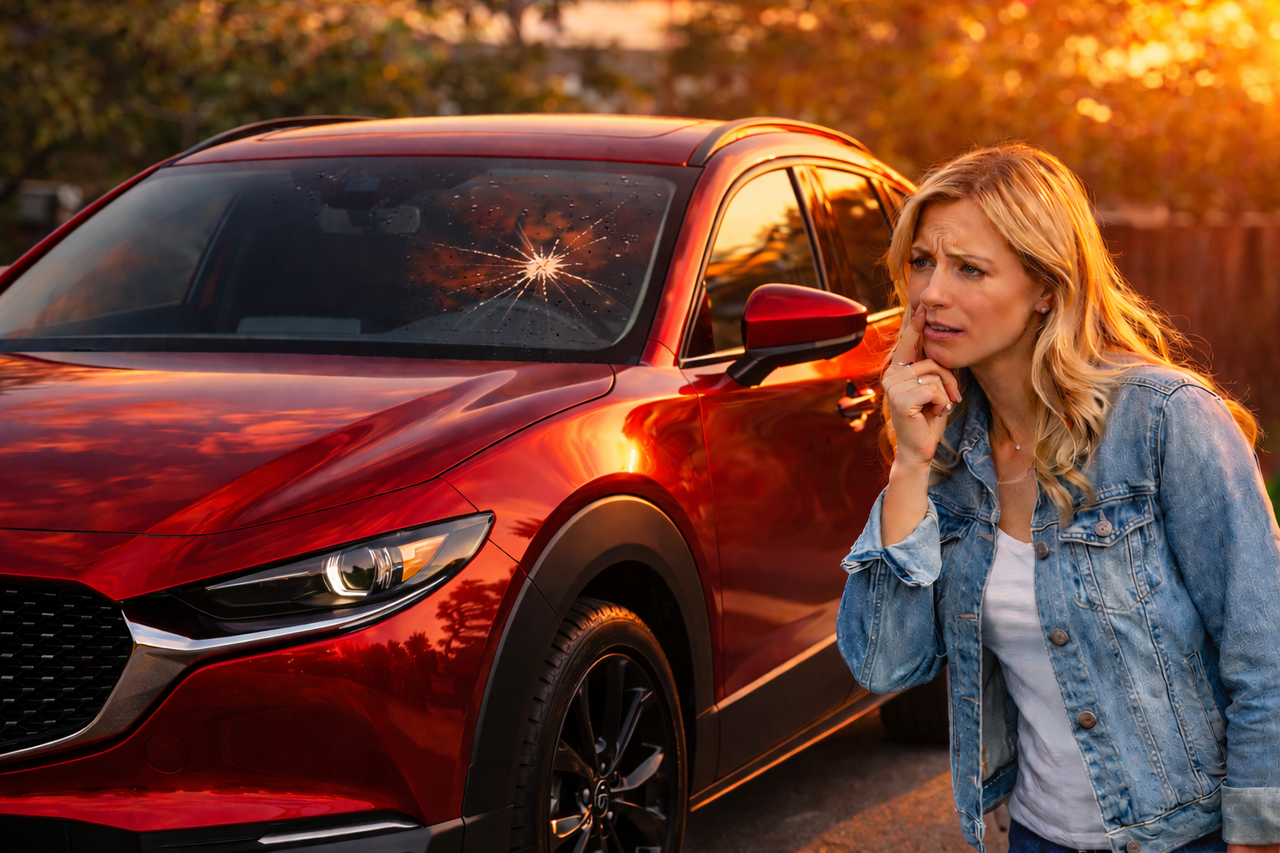
A cracked windshield always seems to show up at the worst moment, usually after a highway rock ping or a hot afternoon followed by a sudden rain burst. In and around Sanford, where I-4 traffic, construction zones, and afternoon storms all conspire against auto glass, it pays to understand what you’re looking at and how quickly you need to act. The risks are not just cosmetic. That thin sheet of laminated glass is an engineered safety component, integral to airbag deployment, roof strength, and your ability to steer clear of trouble.
This guide pulls together what matters most when you discover a crack, drawing on real-world repair experience and the particular conditions drivers face in Sanford. Whether you need quick rock chip repair Sanford drivers rely on or a full Sanford windshield replacement, the choices you make in the first day or two determine whether you save money and time, or end up with a bigger bill and more downtime.
Why windshield damage escalates quickly around Sanford
Heat, humidity, and sudden temperature swings are hard on glass. Sanford’s summer pavement bakes to triple digits, then afternoon storms drop the air temperature in minutes. Laminated windshield glass responds to that stress just like a roadway or a bridge expansion joint, expanding and contracting along its edges first. Even a small chip near the perimeter can spread into a long crack across your line of sight after a single Florida downpour or when you crank the AC on high the moment you start the car.
Local driving conditions add to the risk. Construction trucks on 417, gravel dropping from landscaping trailers, and the occasional debris from storm cleanup mean a steady supply of projectiles. If you had asked me to pick the top two triggers for cracked windshield Sanford drivers report, I’d say rock strikes from loose aggregate and heat-induced stress fractures after a day in the sun.
What lies under the glass matters more than most people realize
Modern windshields aren’t just a view out to the road. On many vehicles built in the past decade, the glass is part of the restraint system. The passenger-side airbag needs a strong windshield to bounce off when it inflates. A windshield with poor adhesion or a fracture at the bonding area can compromise this, especially during front-end impacts.
There’s also roof strength. In a rollover, the windshield’s bond to the pinch-weld helps keep the cabin intact. This is not a hypothetical risk. Body shops see roof crush differences in vehicles where the glass was installed with improper urethane, contaminated surfaces, or not enough cure time. The short version: a crack, or worse, a badly executed prior repair, can turn a safety component into a weak point.
If your car has driver-assistance cameras mounted behind the glass, the windshield becomes part of the sensor suite. Lane-keeping systems, automatic emergency braking, and adaptive cruise control all rely on accurate camera placement and calibration. Any Sanford auto glass replacement on such vehicles should be followed by camera calibration. If it isn’t, the system may drift a few degrees off, which can alter lane detection and distance measurement. In practice, that can mean your car thinks you’re a foot farther from the vehicle ahead than you are.
When a repair is realistic and when replacement is smarter
I’ve watched small star breaks get stabilized so cleanly you have to search to find the mark a year later. I’ve also seen long bullseye fractures that tempted owners to try a quick fix, only to spider out when the first cold front rolled in. The dividing lines are fairly consistent:
- For chips smaller than a quarter, with no crush damage and located away from the edge seal and the driver’s primary sight area, a skilled technician can usually do a clean repair. Sanford windshield repair shops handle these daily, often on a same-day basis.
- For cracks longer than about 3 to 4 inches, or any damage that reaches the edge where the glass bonds to the frame, replacement is usually the safer call. Edge cracks love to spread.
- If the damage sits directly in the sweep of your eyes on the driver’s side, replacement often results in better optical clarity. Even a well-done repair can leave a faint halo or refraction point.
- Multiple chips clustered together, or chips with crushed glass layers, typically respond poorly to resin injection. Again, replacement is the conservative move.
The first two days matter. If you get a rock chip repaired within 24 to 48 hours, the success rate jumps because moisture, fine debris, and microscopic cracks haven’t had time to intrude. Delayed attempts still help, but the clarity and long-term stability won’t match a fresh repair.
Practical steps to take in the first hour
You don’t need a toolkit and a degree in materials science to stabilize windshield damage, but a bit of care prevents a small problem from turning into a long crack.
- Clean, dry, and cover. Blot away moisture with a lint-free cloth. Avoid glass cleaner at the site. If you have a purpose-made chip patch, apply it. In a pinch, a small piece of clear packing tape over the chip reduces dust and water intrusion until a technician can inject resin.
- Avoid pressure and temperature shocks. Close doors gently so pressure pulses don’t radiate through the glass. Keep the AC at a moderate setting for the first drive. Don’t blast a defroster straight at the crack.
- Note the details. Jot down the size, location, and when it happened. A good sanford auto glass repair shop will ask this to judge whether repair is viable on-site.
If you must drive a car with a longer crack, scan for signs of structural compromise. Cracks that reach the edge, audible creaking over bumps, or loosening trim can hint that the bond or frame may be affected. That typically calls for prompt sanford windshield replacement rather than waiting a week.
The case for mobile service in Sanford
Mobile auto glass Sanford technicians earn their keep in parking lots and driveways from Lake Mary to Midway. When the damage is repair-eligible, a mobile setup saves time and reduces risk by avoiding highway speeds on a compromised windshield. For replacements, mobile work can be just as reliable as in-shop, provided two conditions are met: clean, dry environment and proper cure management.
On-site replacements demand attention to humidity and surface prep. The technician needs the pinch-weld free of old urethane and corrosion, the mating surfaces primed, and a urethane bead that matches the vehicle’s specs. I’ve watched techs set up portable canopies in a light drizzle to control the environment, which can be the difference between a perfect bond and a cure inhibited by moisture. Skilled sanford mobile windshield repair and replacement teams will explain safe drive-away times based on the specific urethane used. That number might be 30 minutes in warm, dry weather or a couple of hours on a humid day.
Insurance realities that affect your decision
Florida drivers often have comprehensive coverage that includes glass. Many policies waive the deductible for windshield replacement, which influences timing. If you have coverage, replacement may cost you nothing out of pocket and can be scheduled quickly through a preferred provider list. That said, you can usually choose your shop. Quality varies, and the lowest-bid network provider is not automatically the best. If your vehicle has ADAS features, ask explicitly whether post-install calibration is included, and whether it’s done in-house or by a partner.
For minor chips, filing a claim may not be worth the administrative time if the cash price for rock chip repair Sanford shops charge runs in the 60 to 120 dollar windshield replacement sanford nc range. Consider the number of incidents on your record and your tolerance for extra paperwork. For a single chip on a basic vehicle, I often advise paying out of pocket to keep things simple, unless your insurer has a streamlined glass claim process with direct billing.
Choosing a Sanford shop with the right skills and tooling
There are excellent technicians working both in large national chains and smaller local operations. Regardless of the logo on the van, a few markers separate the careful pros from the dabblers:
- OEM or OEM-equivalent glass and moldings when needed, not a one-size-fits-all substitute that changes curvature or camera view. For older or common vehicles, high-quality aftermarket glass can be fine. For newer models with complex sensors or acoustic layers, OEM matters more.
- Clean, consistent urethane work with documented safe drive-away times. Ask what brand and product they use. Reputable shops will answer without flinching.
- Calibration capability for ADAS cameras after sanford auto glass replacement. Some vehicles need dynamic calibration on the road, others use static targets. If the shop can’t speak to the difference, keep looking.
- Warranty terms that cover both workmanship and water leaks. A solid shop stands behind the seal, not just the glass pane.
I’ve seen drivers bounce between shops after a rushed job leaves wind noise at 60 mph or a tiny seep during heavy rain. Those are fixable, but they are also avoidable. A well-executed Sanford auto glass repair or replacement returns the car to factory-like performance with no rattles, no streaks, and no sensor faults.
What happens during a quality chip repair
Understanding the process helps you judge the work. A technician will position an injector over the chip, pull a vacuum to remove air and moisture, then feed in a low-viscosity resin that wicks into the microfractures. They may cycle vacuum and pressure to drive the resin deeper, then cure it with UV light. The top is finished with a pit resin to restore a smooth surface, scraped level, and polished.
The best results come when the chip is clean, dry, and fresh. After curing, you can expect the blemish to fade by 50 to 80 percent visually, though you may still see a ghost mark at certain angles. Strength, not looks, is the true goal. A good repair halts crack propagation. If a shop promises your windshield will look “like new” after repair, temper your expectations.
Replacement, step by step, and why prep makes or breaks it
A proper sanford windshield replacement starts with protecting paint and interior trim, removing cowl panels and wipers as needed, and cutting the old urethane without gouging the pinch-weld. The remaining adhesive is trimmed to a thin layer, typically about 1 millimeter, which provides the best substrate for new urethane to bond. Any rust is addressed with primer. The glass is prepped with cleaner and primer where required by the adhesive system, then set precisely using setting blocks or a calibrated setting tool.
This is the stage where some mobile operations distinguish themselves. The set must be precise in height and angle so trim fits flush and ADAS cameras sit exactly where the manufacturer expects. An extra millimeter at the top can change camera pitch. Torquing wiper arms and reattaching covers without rattles sounds trivial until you drive away and hear a buzz on rough pavement.
Urethane cure varies with temperature and humidity. You should be told a safe drive-away time. Follow it. A sudden stop or a pothole hit before the adhesive gains strength can shift the glass just enough to create a future leak or squeak.
Sanford-specific risks: storms, tree sap, and parking habits
Summer brings storms that shed branches, shower lots with acorns, and drop sap that can etch the glass if left to bake. A cracked windshield is more vulnerable to blunt impacts from small falling debris. Parking strategy helps. If a covered spot exists, take it. If not, look up for overhanging limbs. After a storm, wash off grit and leaves. Sharp grit around a chip becomes grinding compound under your wiper blades.
Heat cycling in uncovered lots is another quiet enemy. If your schedule allows, park so the nose of the car faces the afternoon sun. That reduces differential heating along the dash line. It’s a small change, but over weeks it’s one less stressor for a marginal crack.
Myths that keep costing drivers money
I hear the same well-meant advice that never quite holds up:
- “Pour clear nail polish into a chip to seal it.” Nail polish hardens brittle and sits on top, not inside microfractures. It also complicates professional resin bonding later.
- “A long crack can be fixed if you drill the ends.” End-drilling is a technique for some structural materials, not a safe or reliable windshield fix for daily drivers. The optics and integrity rarely meet standard afterward.
- “If it doesn’t leak, it’s fine to wait.” Leaks have little to do with crack stability. Temperature, vibration, and edge proximity drive propagation. Quiet glass today can be a split line tomorrow.
What to ask before you book
If you want to filter your options quickly, three questions get to the heart of quality for sanford windshield repair and sanford auto glass replacement:
- Do you calibrate ADAS after replacement on my make and model, and is that included in the price?
- Which urethane system do you use, and what’s my safe drive-away time today given the weather?
- If I have a chip, can you tell me honestly when repair is not advisable because of edge proximity or driver sightline?
A shop confident in its methods answers directly. If you hear vague assurances but no specifics, keep shopping. Reputable providers of auto glass Sanford drivers trust will welcome detail-oriented questions.
A brief note on side and rear glass
The rules shift for tempered glass in side windows and many rear windows. Tempered panes shatter into small cubes rather than spidering. A small crack almost always means the pane will fail soon, sometimes with a door slam. Sanford car window replacement is straightforward and rapid, often done mobile. Just know that side glass rarely, if ever, gets repaired the way windshields do. For rear windows with embedded defrosters or antennas, ask about OEM-equivalent compatibility so you don’t lose radio range or see hot spots in winter.
Cost bands and time frames you can expect
For a single chip repair from a reputable sanford mobile windshield repair technician, expect a price in the neighborhood of 60 to 120 dollars, sometimes with a small add-on for additional chips addressed in the same visit. The work usually takes 20 to 40 minutes.
For a windshield replacement, the spread is wider. Common vehicles without sensors might land between 250 and 450 dollars using quality aftermarket glass. Vehicles with rain sensors, acoustic interlayers, heads-up display, or ADAS cameras can push 500 to 1,000 dollars or more, especially if OEM glass is required. Calibration typically adds time and cost if not bundled. With mobile auto glass Sanford service, plan an hour to remove and set, plus cure time as advised, and additional time for calibration if done off-site.
Aftercare that actually matters
You’ll be told not to wash the car immediately, to leave the blue tape in place for a day, and to crack a window slightly to reduce interior pressure swings. Do those things. Avoid slamming doors, speed bumps taken fast, and high-pressure washing aimed at the moldings for at least 24 hours. Skip windshield sunshades on day one if the glass was just replaced. They trap heat at the top edge, exactly where adhesive is still gaining strength.
For repaired chips, don’t obsess over the faint mark you still see. Watch for migration. If a hairline begins to grow from the repair site, call the shop. Many offer credit of the repair cost toward a replacement if propagation occurs within a set period.
When to make the call without second-guessing
Some situations do not benefit from wait-and-see:
- A crack that intersects the edge bond.
- Damage directly in front of the driver’s eyes, especially if a halo appears under bright sun.
- Newer vehicles with ADAS where clarity and exact camera placement are safety-critical.
- Any sign of water intrusion, wind noise at speed, or visible movement of the glass at the perimeter.
In those cases, call a sanford auto glass repair provider and schedule either immediate repair or a sanford auto glass replacement. Time is on the side of the problem, not the solution.
Connecting the dots: a practical path forward
You don’t need to become a glass expert to protect your car and your safety. Focus on three things. Stabilize early with gentle handling and a simple cover over the chip. Get a candid assessment from a technician who handles both sanford windshield repair and sanford windshield replacement, rather than someone who only does one or the other. If replacement is needed, insist on proper materials, clean prep, and calibration where applicable.
The drivers who come out ahead treat the windshield like the safety part it is. They address damage quickly, avoid short cuts, and pick providers on skill rather than the flashiest ad. That’s especially true here, where weather swings and heavy traffic turn minor chips into long cracks faster than you’d expect. The right move might be a 30-minute repair in your office lot or a scheduled replacement with calibration the next morning. Either way, acting early saves more than money. It preserves the integrity of the car that protects you every mile.
Leave a Reply